Day 8 – Kandy to Bandarawela
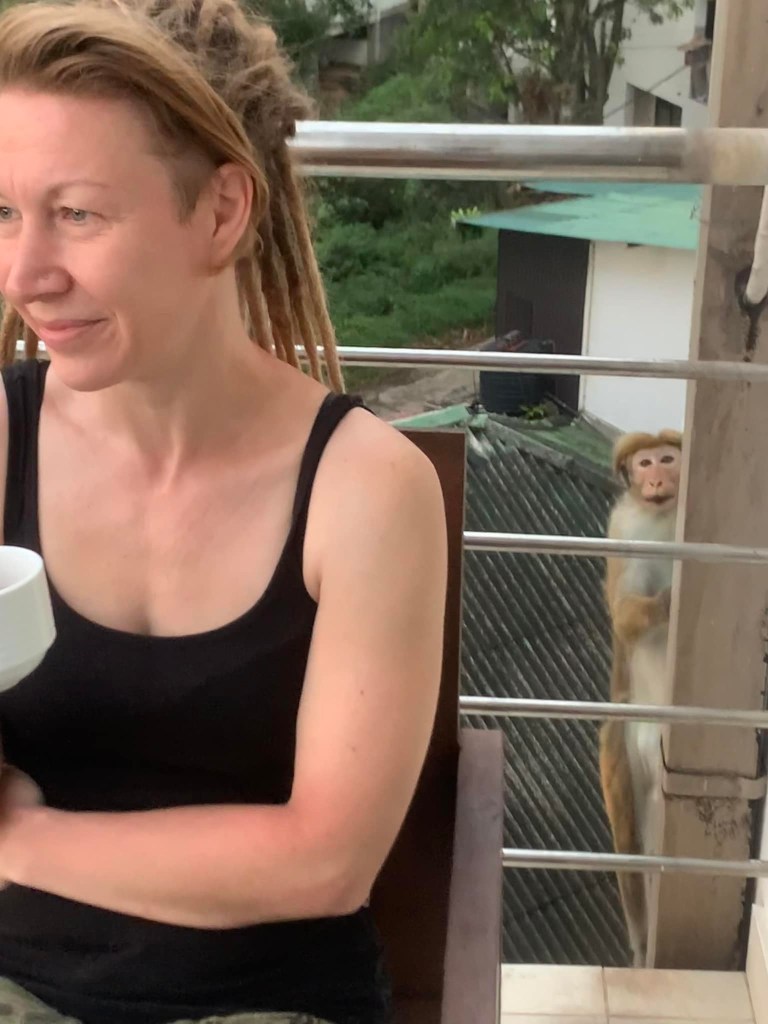
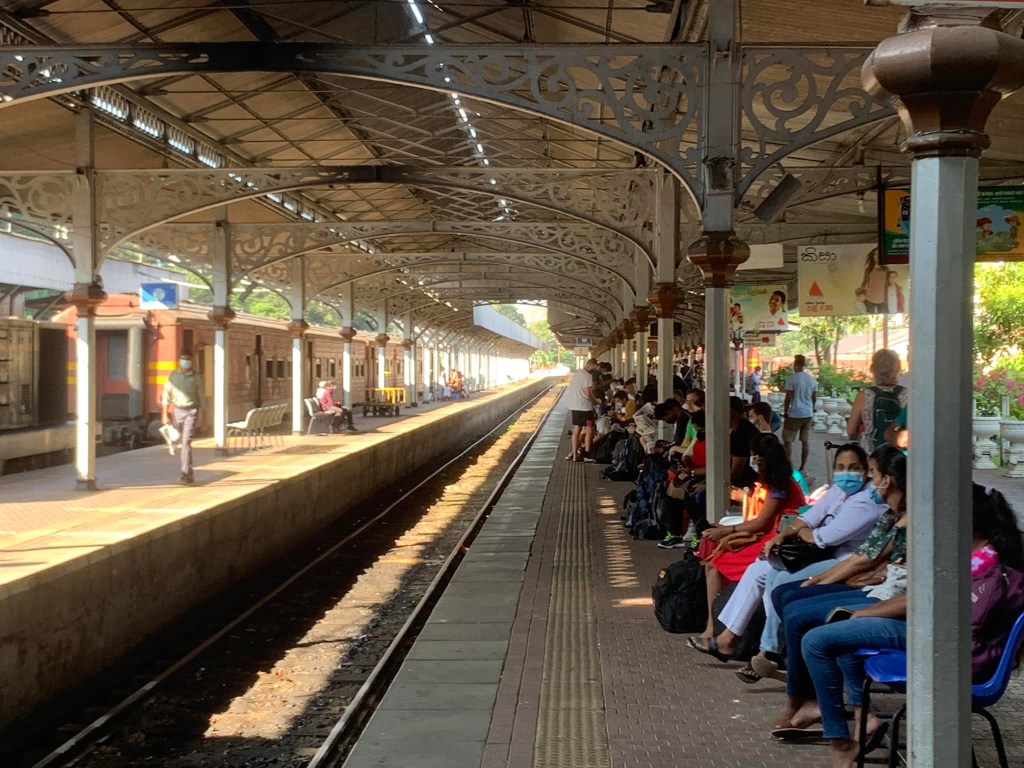
Morning coffee was had on the balcony with an Elvis monkey spying Mrs Dude’s fruit. Then a quick walk down the hill to the station.
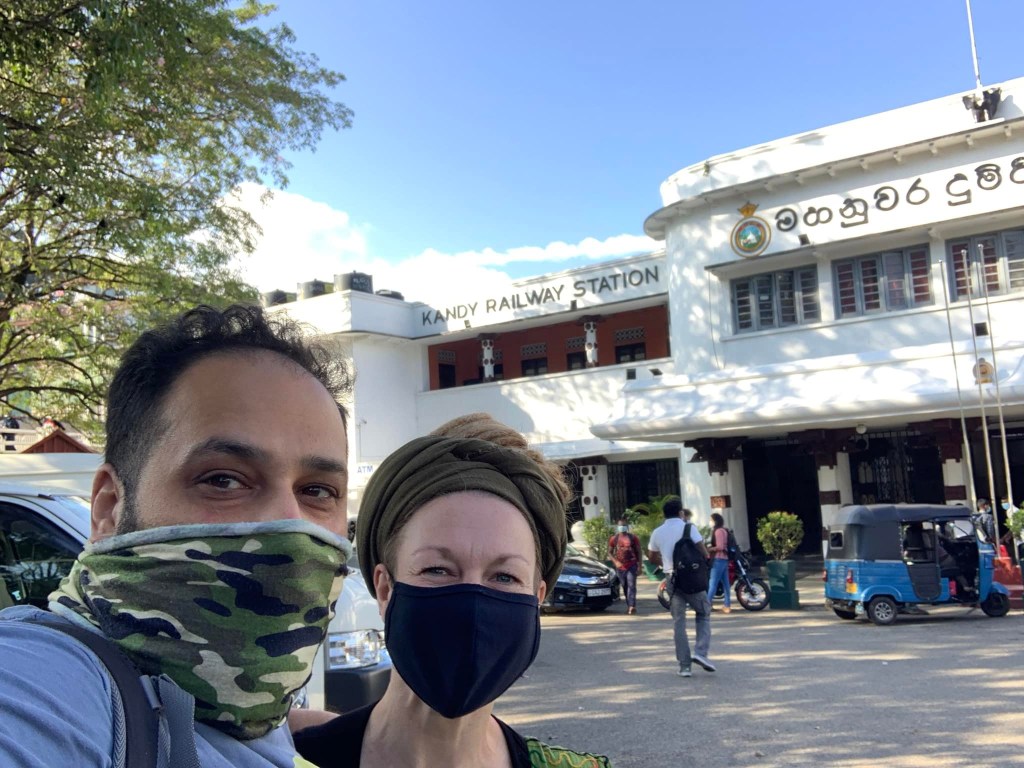
The 8:46 from Kandy was running late. Only by 20 minutes or so. No delay repay here🤣
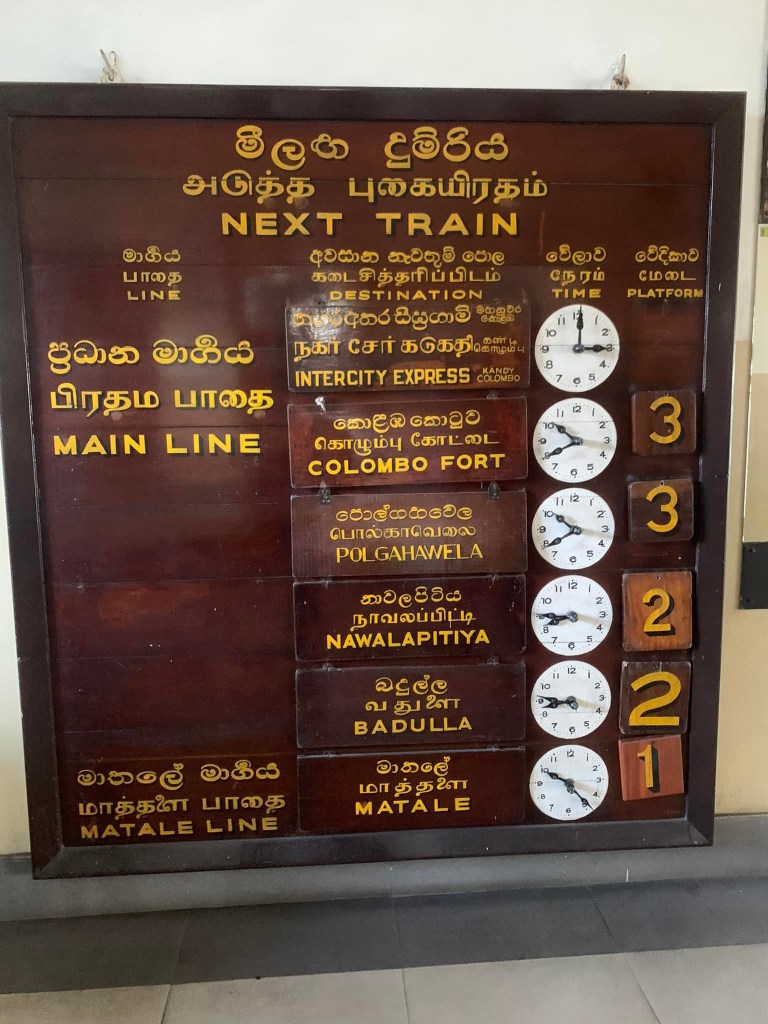
It sweet that the daily timetable is a traditional wooden board with clock faces on it. I like little things like that.
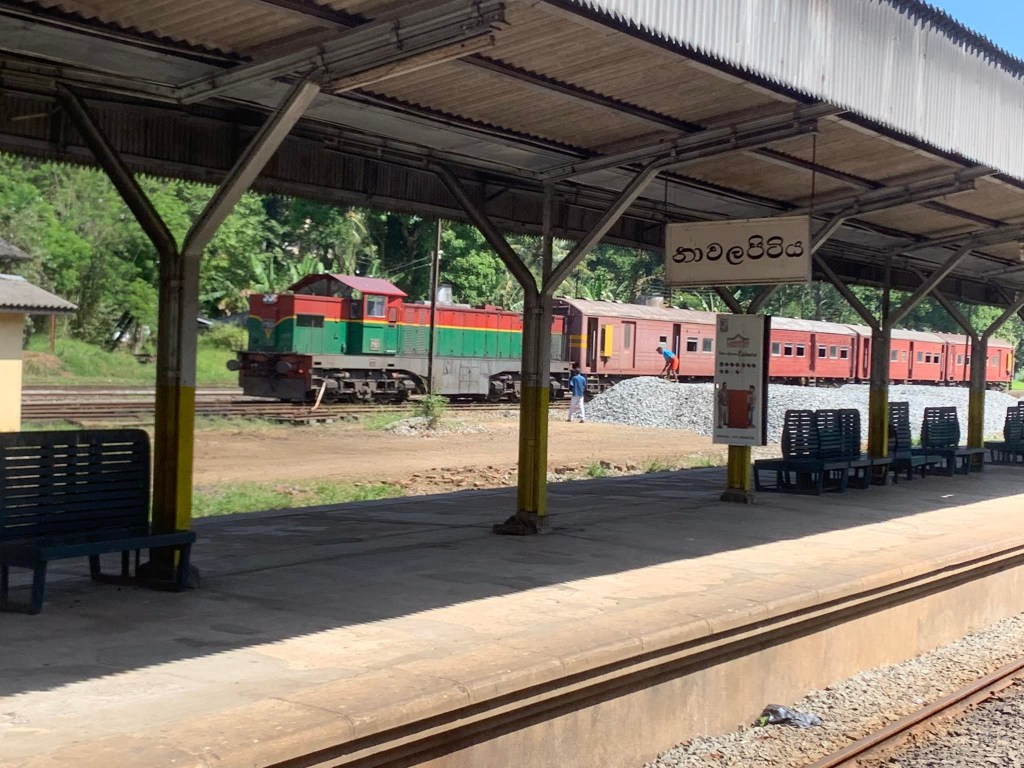
There’s 1st, 2nd and 3rd class here. We had booked reserved seats in 3rd class, I was hoping for the rustic wooden seat experience, shoulder to shoulder with locals. Most of the carriages in the yard were rust painted timber boxes. A bit like old slam doors but with a door at each end only, with rickety wooden ladder steps to climb in. Boxy old diesel tugs (can’t remember the name for them) shunted rusty carriages in and out the station.
What arrived on platform 3 was a sleek, dirty white but modern diesel locomotive, with matching livery carriages to suit.
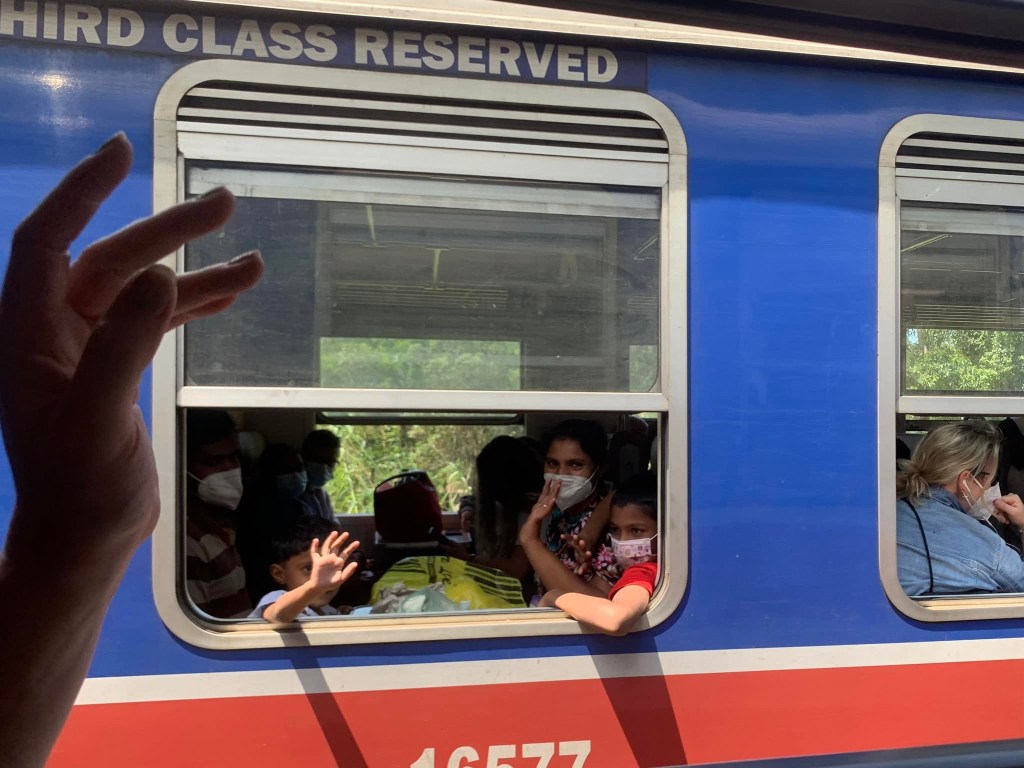
3rd class reserved for us, only the best!
Well 3rd class is better than standard at home. Cushioned plastic seating with a table per bay. Opening windows, fans and clean loos!
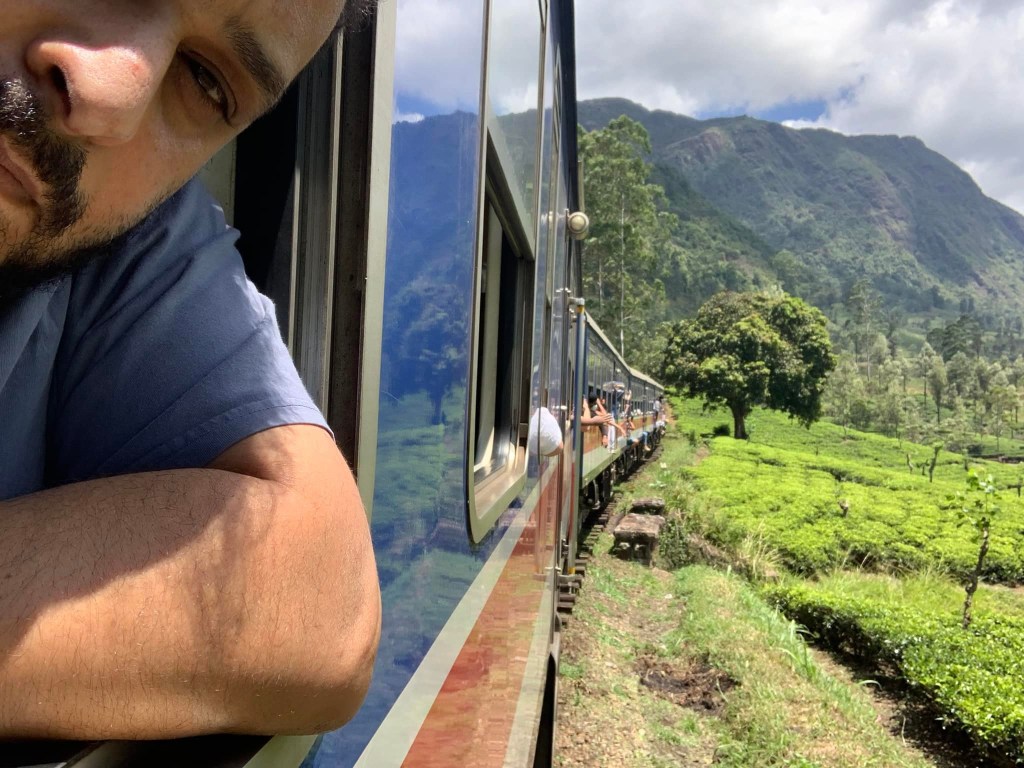
As we left the city, the housing density slowly dwindled until we would be passing fields and tropical trees, with the background mountains getting higher and more majestic throughout the climb.
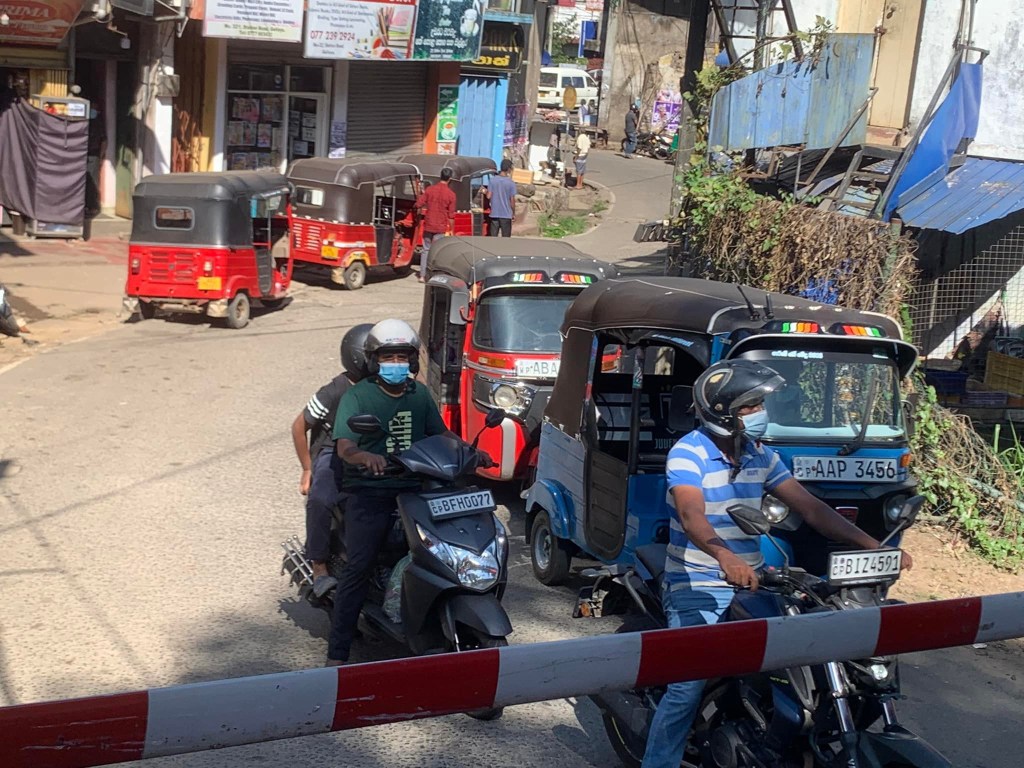
We would enter a small town station where the train was longer than the platform, holding up traffic at the (barrier less) road crossing, whilst some embarked or disembarked.
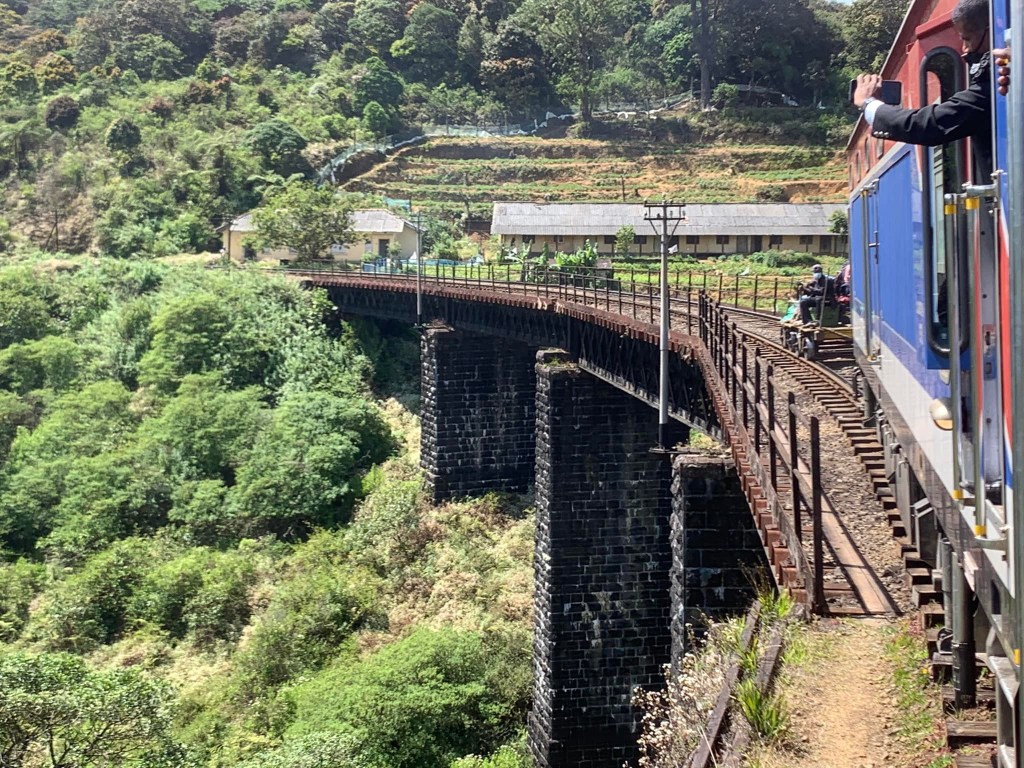
It’s virtually all single track line here, with sidings for oncoming traffic, so we would frequently pass trains in touching distance, or be held up for 5 minutes whilst another train went past.
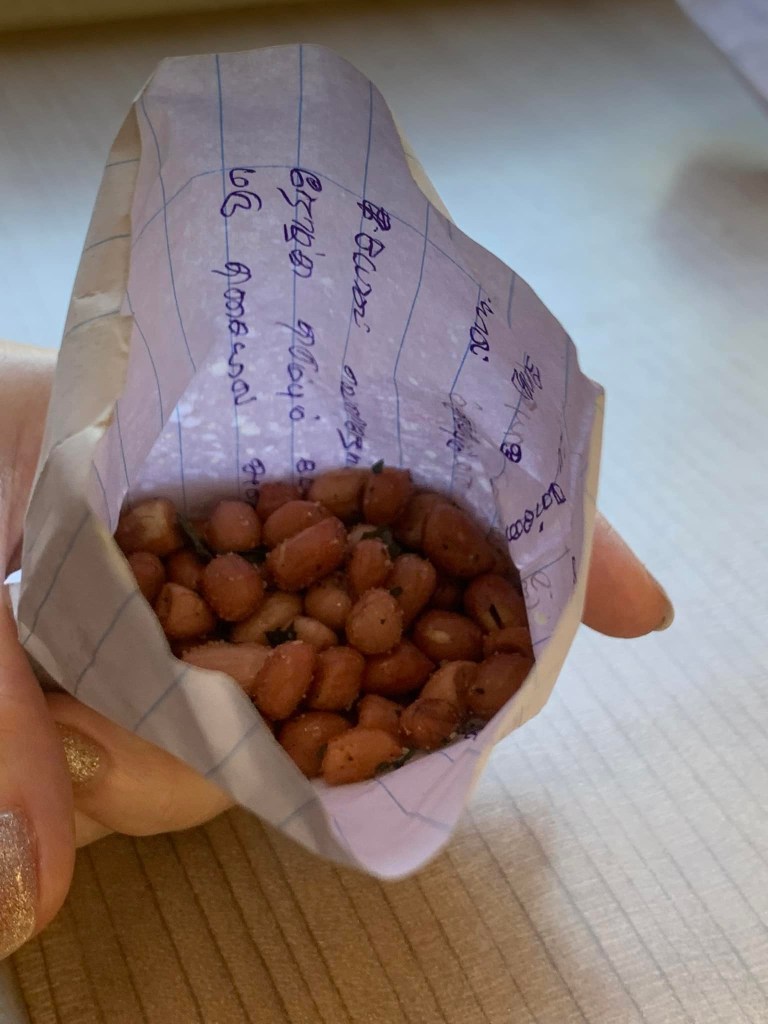
We stop at another station. This time, several guys alight carrying bags and boxes of foodstuffs. Meandering through the carriages they have packets of dried chickpea snacks, cold drinks and samosas. One guy has a basket with hot peanuts, serving into paper packets (made out of used homework sheets), with a pinch of spicy salt on top. They’re still hot as if they’ve just come out of the oven. Well actually not an oven but they’re cooked in hot sand in a pan.
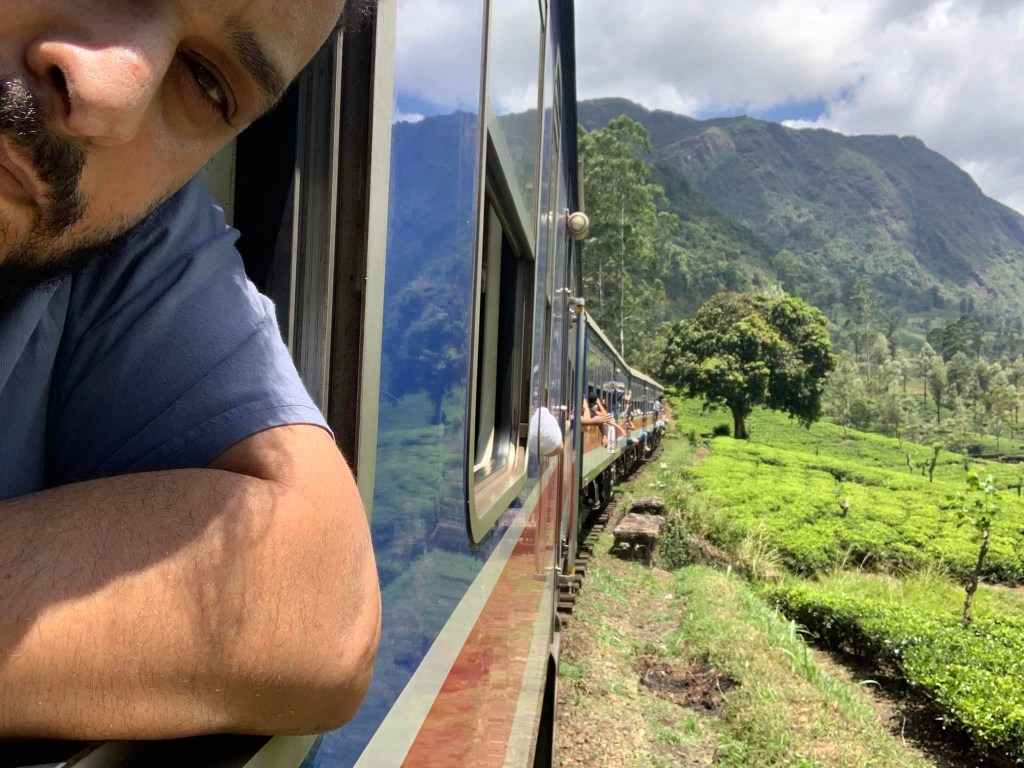
The diesel engine’s tone has changed up a gear. We’re climbing, the scenery is changing. After bananas and palms, came conifers and pines, now it’s opened up to hills full of tea trees, but pruned to bush height.
We peaked around 1770 metres then started our decent. The soil changed from red iron rich to a more familiar brown, and the foliage changed to recognisable small leaved trees.
As it’s Sunday and the school holidays, there were several families and groups, travelling to meet loved ones in other towns. Someone periodically banged out a beat on a hand drum.
Vendors continued getting on at one station and selling their goodies on each carriage. We made use of the Chai-walla and samosa man.
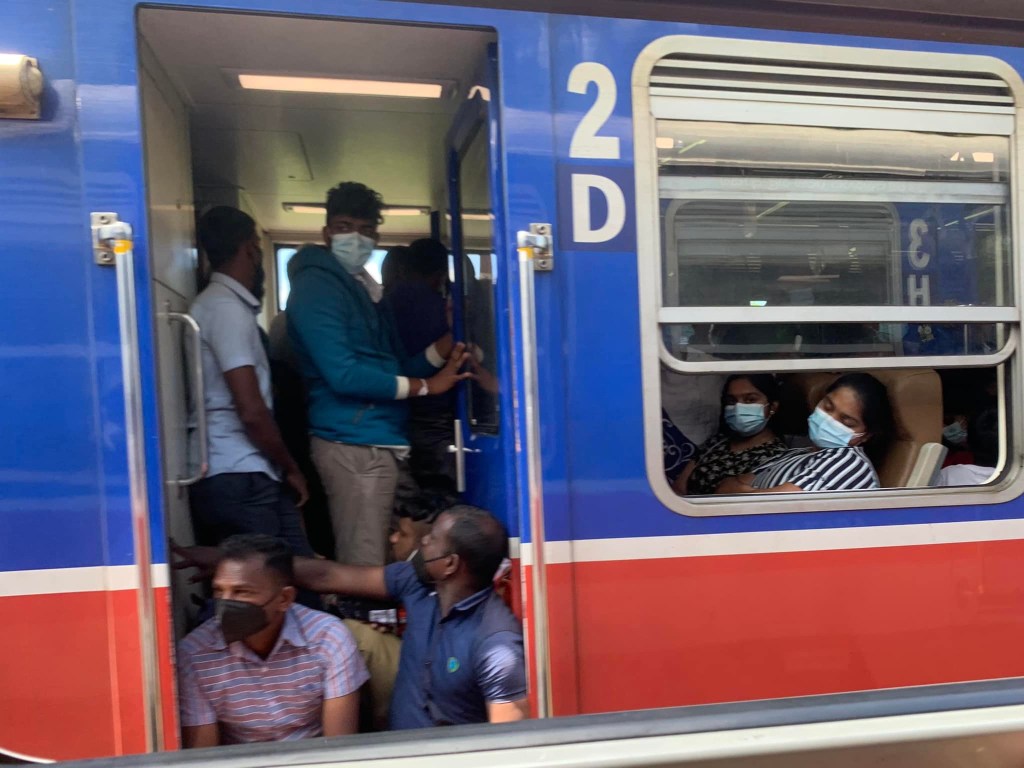
Then a large group of youngsters from the UK boarded and our carriage got very busy. They were doing a similar tour but travelling by train most of the way. Their English guide didn’t speak Sinaleese which I found odd.
All in all, it was quite an exhausting train ride. 6 and a bit hours long and whilst the scenery was breakthaking, the novelty wore off on the small seats.
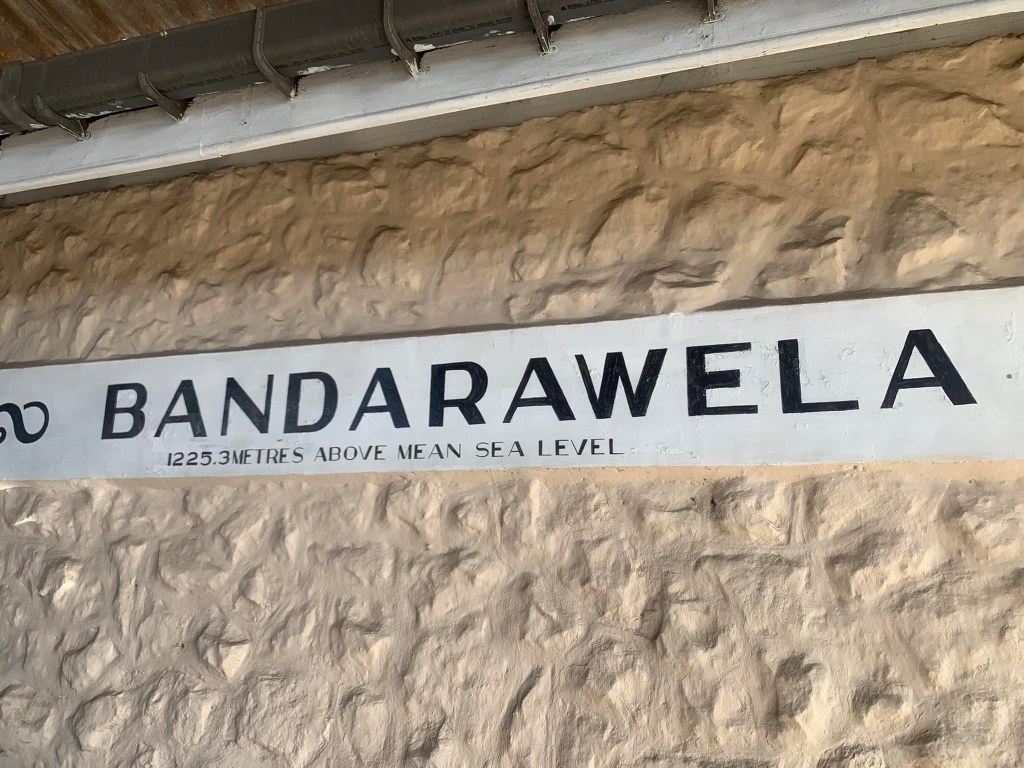
We reached Bandarawela Station and walked up to the Oriental Hotel. Nothing special, very corporate looking but the welcome was still warm.
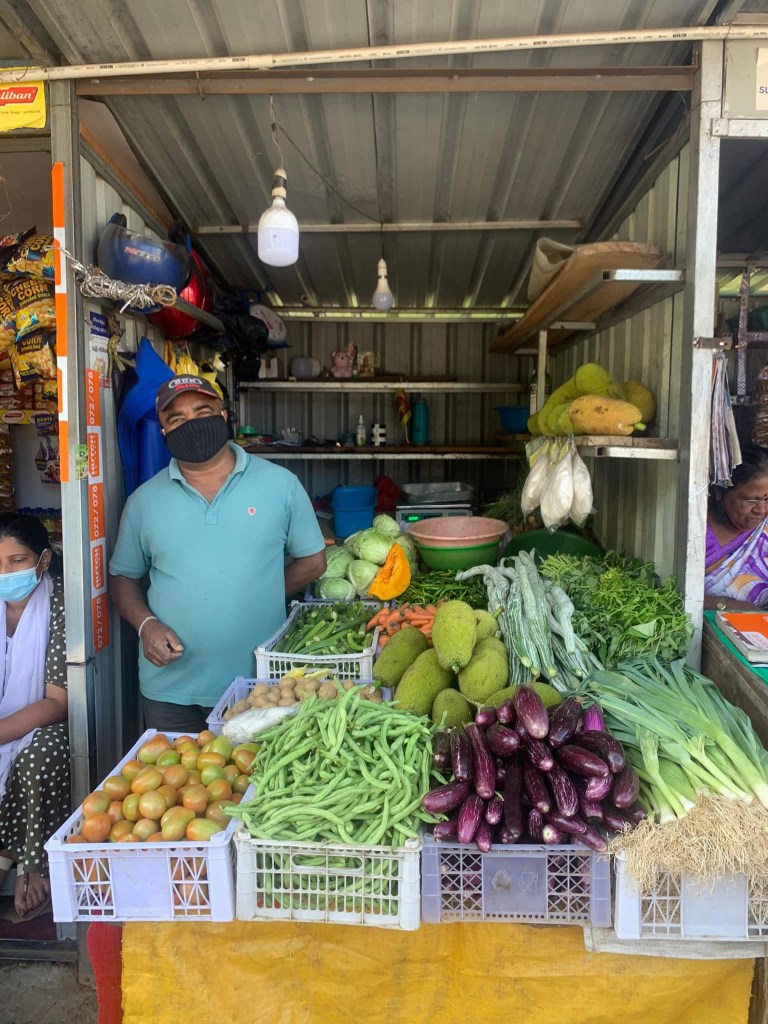
A quick walk into town to check out the shops and an ATM. This is a proper local town. No tourists at all, so no sales hassle, just the hassle and bustle of Sunday market day.
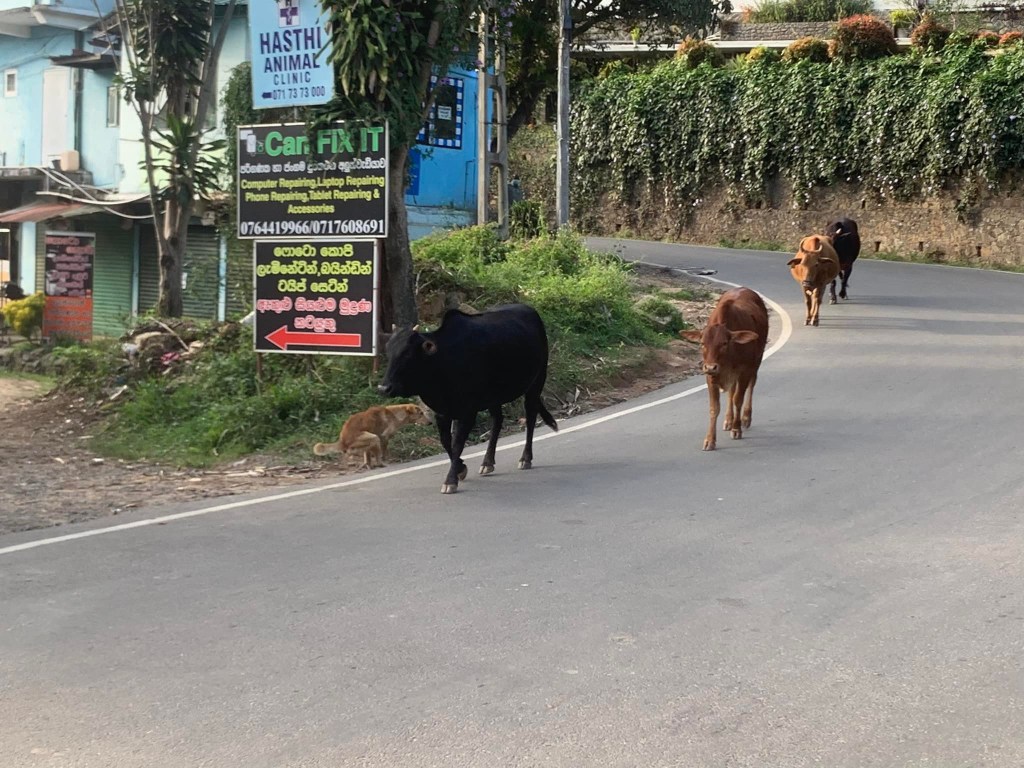
Our cooking lesson in the beautiful grounds of the hotel started at 6. Unfortunately, Becky and I had booked a massage for 7:30. In all honesty, chef got us chopping and prepping veg for an hour. We snuck away for a massage and cheekily returned for a light dinner that our fellow guests had helped make.
In the evening, it’s almost warm enough to put a jumper on. The hills are damp with cloud rolling in off the high mountains and the sound of music and diesel generators purrs in the background.
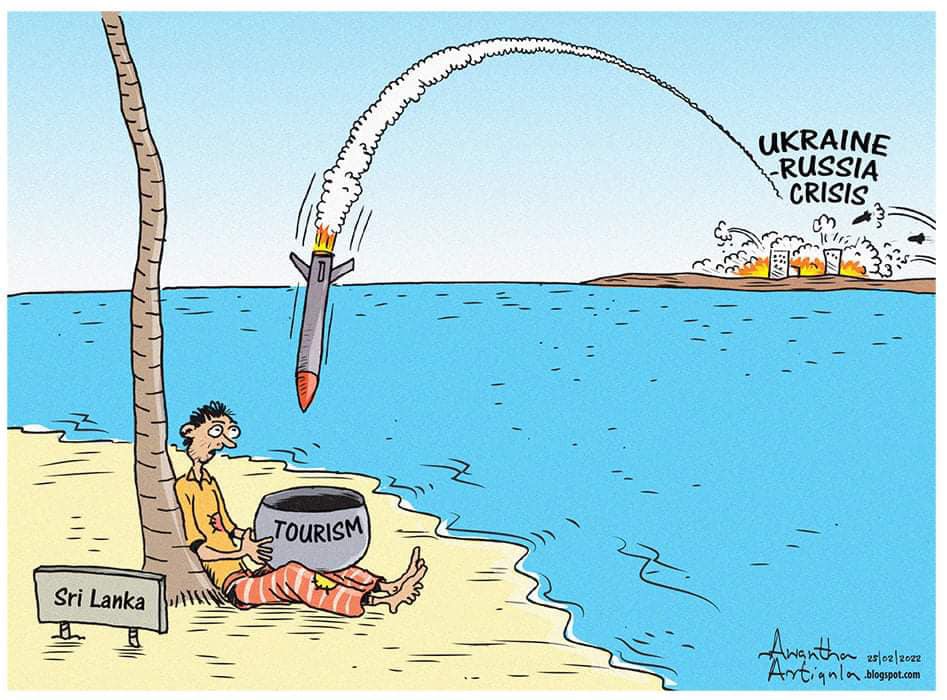
Fuel is still in short supply here. Putin the prick has made it even worse. For ‘developing’ (I hate that phrase) countries with massive national debt, poor exchange rates, mismanagement at the top and tourism being one of its biggest incomes, it couldn’t have come at a worse time. Our tireless bus crew are constantly on the lookout for diesel.
 Travel Dude